- Hydrogen Rising
- Posts
- CWP Global struggles to retain staff
CWP Global struggles to retain staff
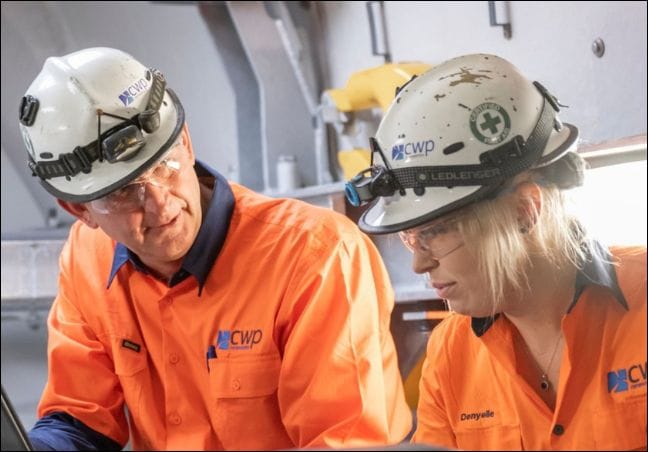
Source: CWP Global
From the newsletter
Serbia-founded renewable energy developer CWP Global is facing mounting retention pressures across its African operations, with LinkedIn data pointing to sustained attrition and a contracting workforce. Over the past year, departures have outpaced hiring, signalling internal strain as the company’s green hydrogen portfolio remains largely in early-stage development.
Through its entity CWP Terra, the firm is developing projects across Africa, including the $40bn 40GW AMAN green hydrogen project in Mauritania, AMUN in Morocco, Hayyu in Djibouti and a 600MW project in Angola.
Retention metrics, however, suggest a workforce under pressure. Attrition stands at 38%, while average tenure is just 3.4 years, indicating many employees leave before projects reach execution.
More details
Workforce data from CWP Global points to structural rather than short-term retention pressures. Headcount has declined to just 22 employees despite five hires over the past year, indicating that exits are not being fully backfilled. Net talent outflow totals nine departures versus five hires, raising risks around institutional knowledge loss and project delivery as the company advances its green hydrogen pipeline.
The company is losing talent to more established and diversified players, including A.P. Moller - Maersk, Pupkewitz Group of Companies and Artelia Maroc. This suggests staff are moving to organisations with more mature operations, offering greater job stability, clearer project pipelines and stronger long-term career prospects than CWP Global’s development-focused environment.
Geographically, the workforce is highly concentrated in South Africa, which accounts for over two-thirds of employees (15) and has seen the only meaningful growth (+36%). In contrast, headcount in Mauritania, home to the flagship AMAN hydrogen project, has declined sharply to just 6. This divergence suggests slower-than-expected progress in key project locations. In June 2025, management indicated that the AMAN project had stalled due to weak global carbon pricing, which has reduced buyer willingness to pay a premium for green fuels.
Functionally, 23% of staff are in operations, followed by administration, finance and sales at 9% each, demonstrating a lean model with small multi-role teams rather than fully built-out departments. This aligns with the workforce skills profile, which is heavily weighted toward commercial and strategic capabilities rather than technical depth. Business planning is the most prominent skill (14%), followed by finance competencies such as managerial finance, ledger management and statutory US GAAP reporting (around 9% each). The team is clearly focused on project structuring, financial modelling and compliance, with limited in-house engineering or execution capacity.
The company’s employee education profile stands out for its extreme concentration at the postgraduate level, with 100% of staff holding master’s degrees, far above the industry average of around 30%. The most studied course is economics, accounting for 14% of employees, followed by a mix of accounting, technical and administrative disciplines at 5% each. This distribution reinforces a focus on investment and commercial strategy rather than technical or vocational capability required for large-scale project execution.
The workforce is relatively senior, averaging 10.8 years of experience, with particularly high experience in sales (15.3 years) and administration (10.8 years). Together, this indicates deliberate hiring of experienced, highly educated professionals for development and coordination roles but limited technical depth for later-stage execution.
Our take
Persistent attrition, combined with short tenure and limited backfilling, suggests roles may not extend across the full project lifecycle, risking continuity and institutional knowledge as projects move from development into complex delivery phases.
While the workforce is heavily skewed toward commercially oriented, highly educated talent, the lack of technical and operational depth raises questions about the company’s readiness to transition from development into execution, where engineering capacity will be critical.